


























Expert guide
How to choose a WC
The right WC shapes both everyday comfort and bathroom hygiene. This guide walks you through every step, from choosing the type and measuring the space to the shape and the flushing technology.
Where to start
Choosing a WC starts with the bathroom itself: a model that is perfect in one room can make installation difficult in another. So before you browse, consider both the space and the way your household lives. Answer five questions:
- How much room is there, and where does the waste pipe come out: from the wall or from the floor?
- Are you replacing an old WC or planning the bathroom from scratch? A new model has to fit the existing dimensions and fixing points.
- Who will use it? Height and comfort matter most for children, older people and people with limited mobility.
- Which shape suits your bathroom: soft, rounded lines or crisp, square ones?
- How important are easy cleaning and modern flushing technology to you?
See in the catalogue
WC types
One of the first decisions is the type of WC. It depends on how it is installed, on the layout of the bathroom and on your habits. VitrA's collections offer four main solutions.
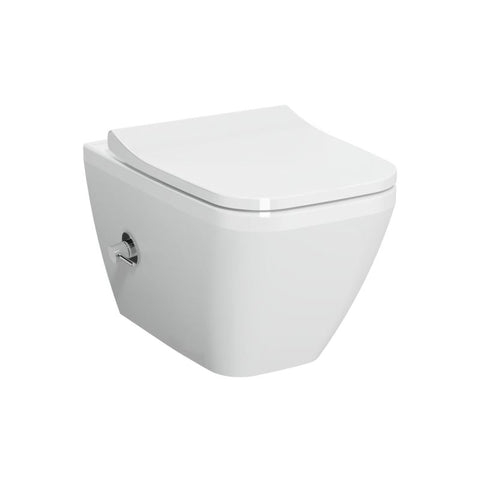
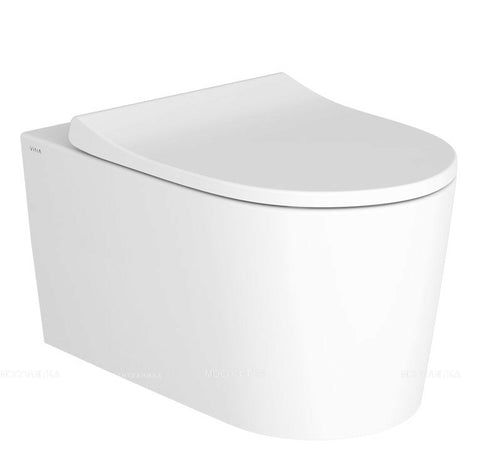
- Wall-hung WC Fixed to the wall, with the cistern hidden inside it. The floor stays clear, cleaning is easy and the look is modern. See in the catalogue
- Floor-standing WC Stands firmly on the floor against the wall: a classic installation that is especially convenient in a renovation. See in the catalogue
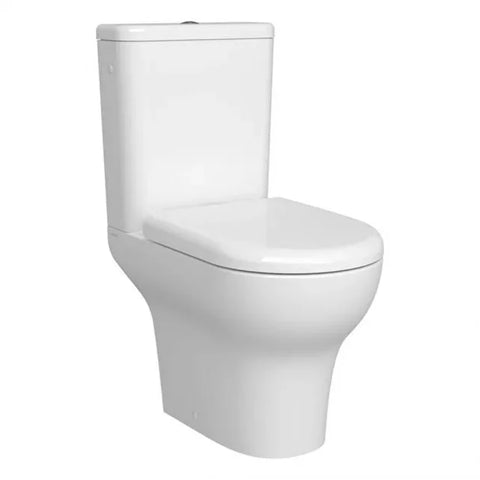
- Close-coupled WC The ceramic cistern sits on the back of the pan, outside the wall. Easy to install and a compact solution. See in the catalogue
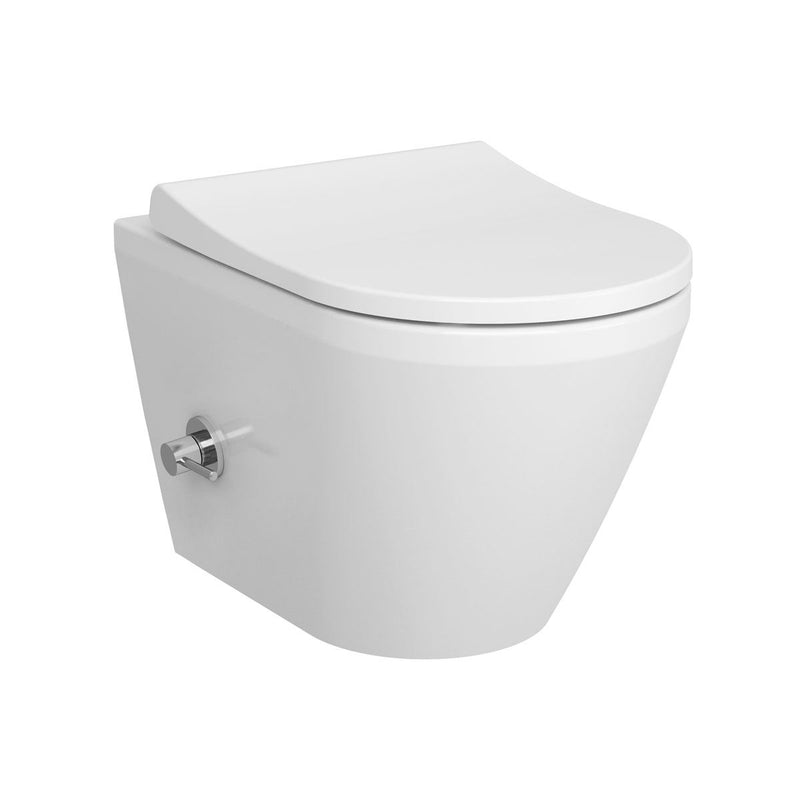
- WC with bidet function One product that combines a WC and a bidet; smart models are run by remote control. See in the catalogue
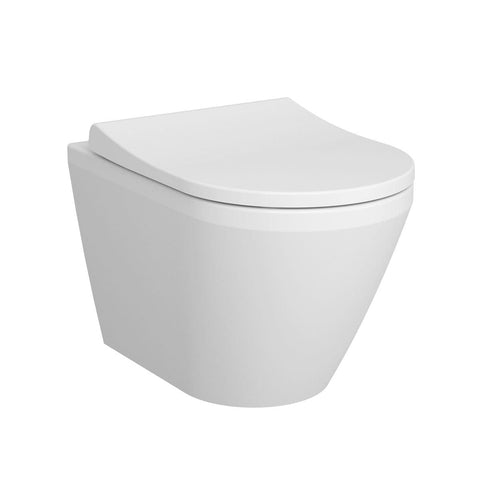
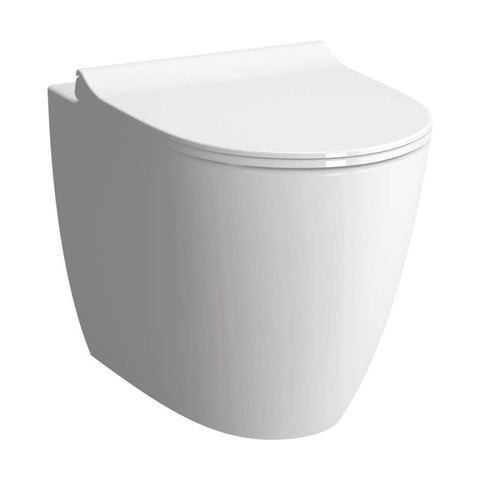
Wall-hung WC
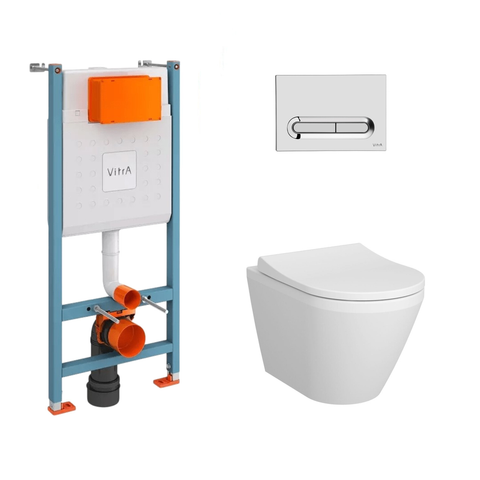
Wall-hung WCs are the most popular choice in modern bathrooms. The cistern is in the wall and the pan does not touch the floor, so you can clean underneath and the room feels more open. VitrA's Sento and Integra ranges offer wall-hung WCs in several sizes and shapes. A wall-hung WC is always installed with a concealed cistern and a flush plate, so the space for the cistern in the wall has to be planned before the plumbing work starts.
You will need: Concealed cistern, flush plate
Floor-standing WC
A floor-standing WC is fixed to the floor and placed against the wall. It can be connected to a waste pipe in the floor or in the wall, so before you choose, check where the waste comes out and how far it is from the wall. This type is a good choice when a cistern cannot be built into the wall, or when you are replacing an old WC.
Close-coupled WC
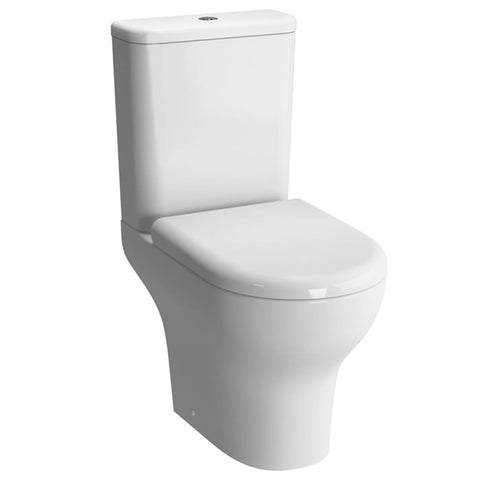
A close-coupled WC carries its ceramic cistern on the back, outside the wall. No wall has to be opened, so the renovation is quicker and simpler. In the Zentrum range you will also find such models with VitrA Rim-ex technology.
WC with bidet function
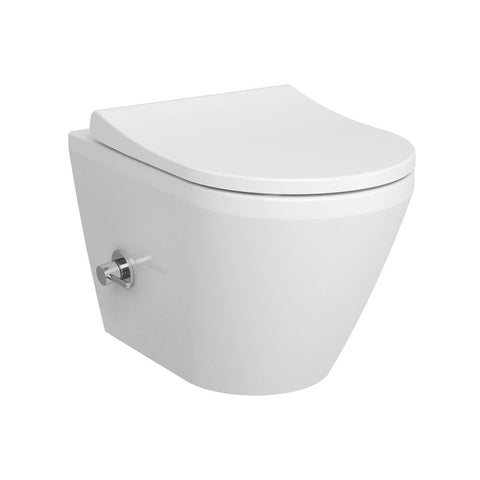
A WC with a bidet function combines two products in one and saves space. Smart WCs such as VitrA V-Care are run by remote control: the lid rises and lowers automatically, the water temperature can be set, the bidet nozzle cleans itself, and there are several wash modes, a dryer and odour absorption. Such a model needs an electrical connection as well as water, so plan for it before installation.
See in the catalogue
-
 Wall-hung WCs
-
 Floor-standing WCs
-
 Close-coupled WCs
-
 WCs with bidet function
-
 WC sets with cistern and flush plate
-
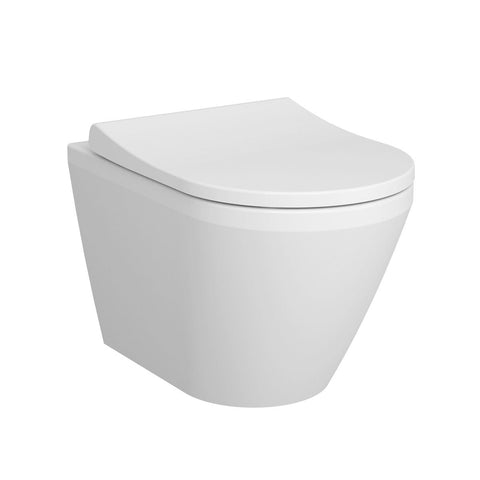
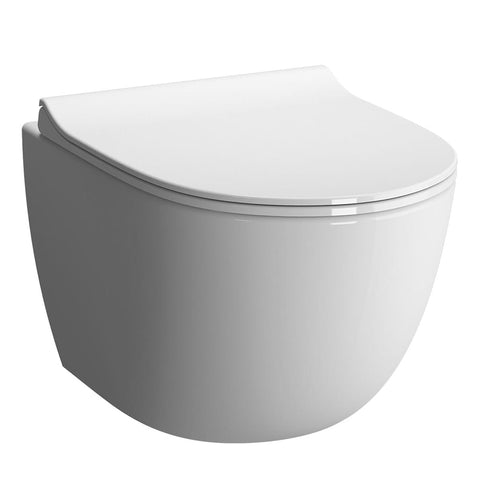 Wall-hung WC-pan Sento 54 cm Rim-ex | 7748B003-0075
-
 Wall-hung toilet Integra Rim-ex with function 54 cm 7041B003-0075
-
Floor standing WC pan Sento | 5985B003-0075
-
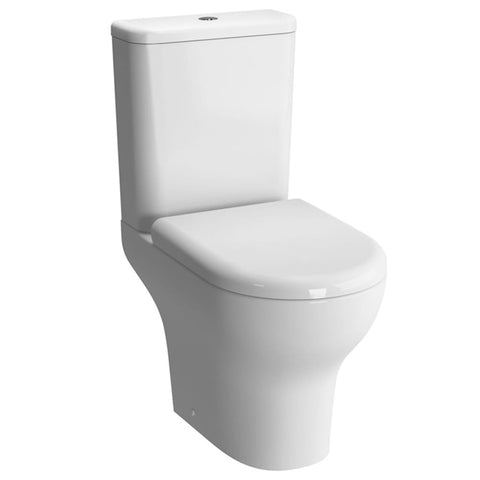 Zentrum Rim-Ex Close-Coupled Wc Pan, Open-Back | 5789B003-0075
-
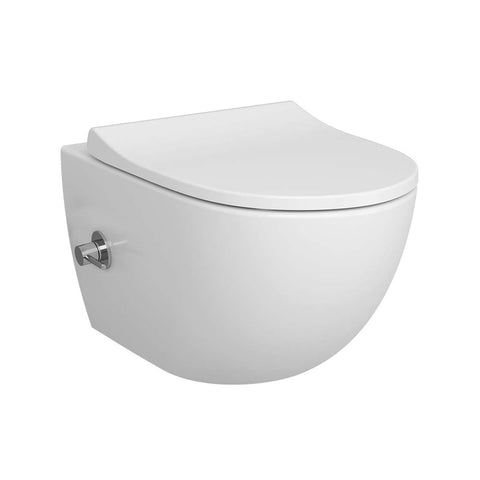 Wall-hung WC pan Sento with bidet function | 4448B003-1684
Sizes and outlet
Two things matter when you choose: the dimensions of the WC itself and the waste outlet. To measure, check three dimensions:
- Depth — from the wall to the front edge of the pan;
- Width — between the left and right edges of the pan;
- Height — from the floor to the seating surface.
A standard WC is generally 52–63 cm deep, 35–38 cm wide and 40–43 cm high. Compact models are about 48 cm deep, which saves precious centimetres in a small bathroom. In our range, for example, the Sento wall-hung WC comes in a 54 cm standard and a 49.5 cm compact version, and Integra Rim-ex in 54 cm and 50 cm.
There are two outlet types: a wall outlet, when the waste pipe goes into the wall, and a floor outlet, when it goes into the floor. Before choosing a new model, always check where your waste pipe comes out.
- 52–63 cm Depth
- 35–38 cm Width
- 40–43 cm Height
- ~48 cm Compact
Typical dimensions; see each product page for exact sizes.
Shape and colour
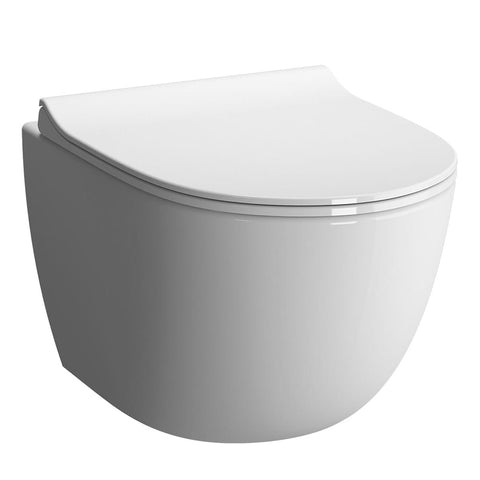
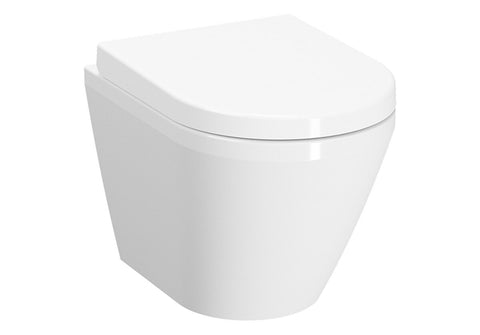
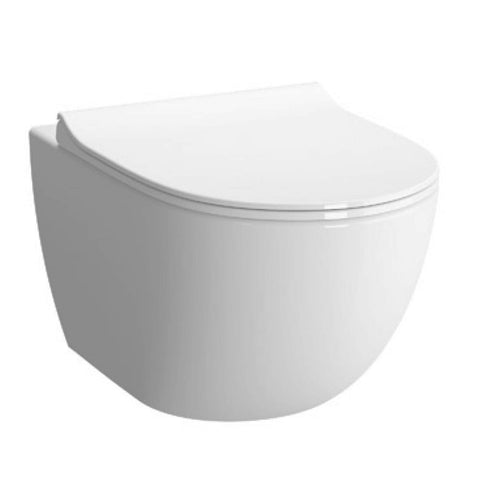
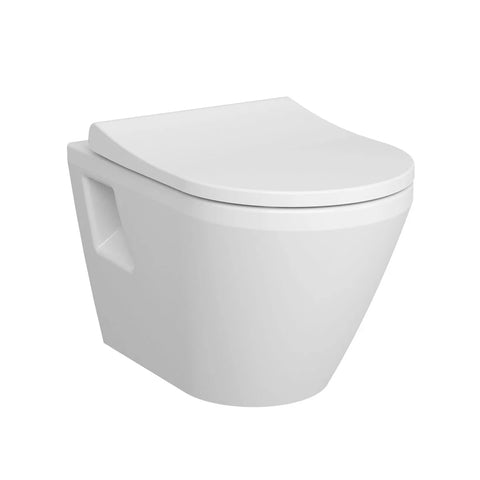
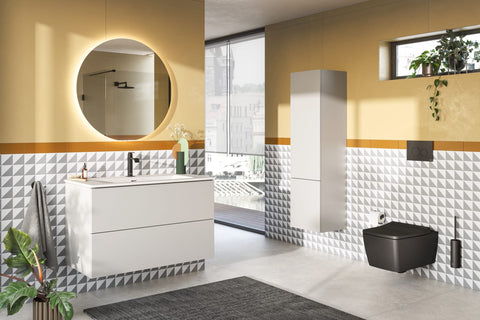
Two main shapes stand out in VitrA's WCs. A round WC has soft, oval lines: it makes the bathroom feel lighter, reads as compact in a small room and suits any interior. A square model has crisp, geometric lines and suits a modern, minimal bathroom, where it forms one composition with the basin and the furniture. The Integra range has both: Integra Round and Integra Square.
Colour sets the character of the room as well. Beside classic white, our WCs also come in matt white, matt black, matt grey and matt taupe; the 54 cm Sento, for example, comes in all of them.
See in the catalogue
-
 Sento
-
 Integra
-
 Metropole
-
 Hanging toilet Integra Round 54cm 7063B003-0075
-
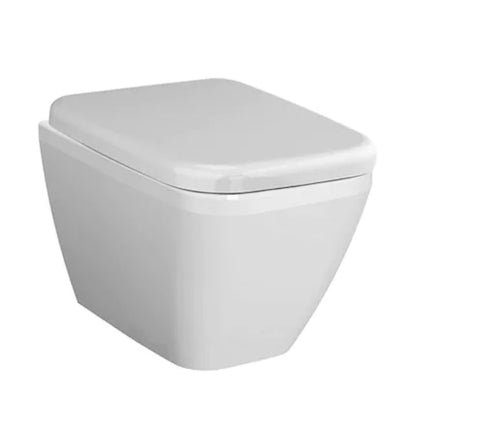 Wall-hung WC-pan Integra Square 54 cm Shift cover | 7081B003-0075
-
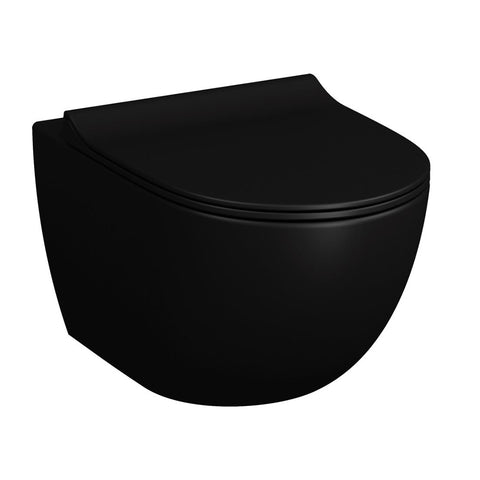 Sento Rim-ex wall-hung WC pan, 54 cm, Matt Black | 7748B083-0101
-
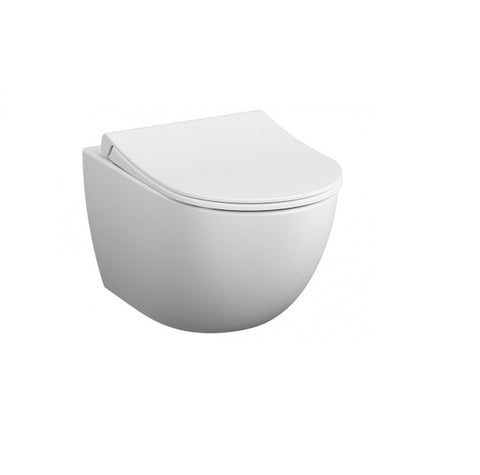 Wall mounted toilet Sento 54 cm white matte | 7748B001-0101
-
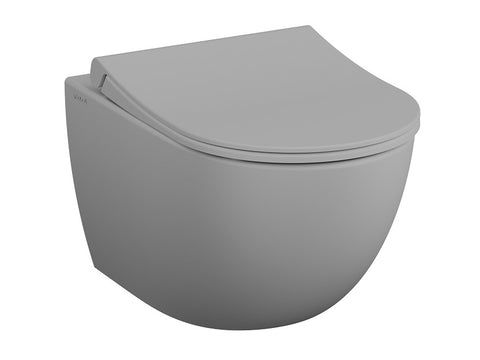 Wall mounted toilet Sento Rim-ex gray 54 cm 7748B076-0101


Hygiene and flushing
Today a WC is more than sanitaryware: it brings together technologies designed for hygiene and efficiency.
- VitrA Rim-ex — a rimless WC. In a conventional WC the flush runs through a channel hidden under the rim, and that is where dirt collects. Rim-ex has no such channel, so it retains 95% less dirt than a standard toilet, and its patented three-point water distribution makes flushing 25% more effective.
- VitrA Hygiene. A special glaze that reduces bacterial growth on the ceramic surface by 99.9%.
- VitrA Clean. A surface that water and dirt cling to less, so the WC stays clean longer and is easy to wipe.
- VitrA QuantumFlush. A flushing system that, in accredited laboratory tests, is 8.45 dBA quieter than a standard toilet: about 7 times less noise.
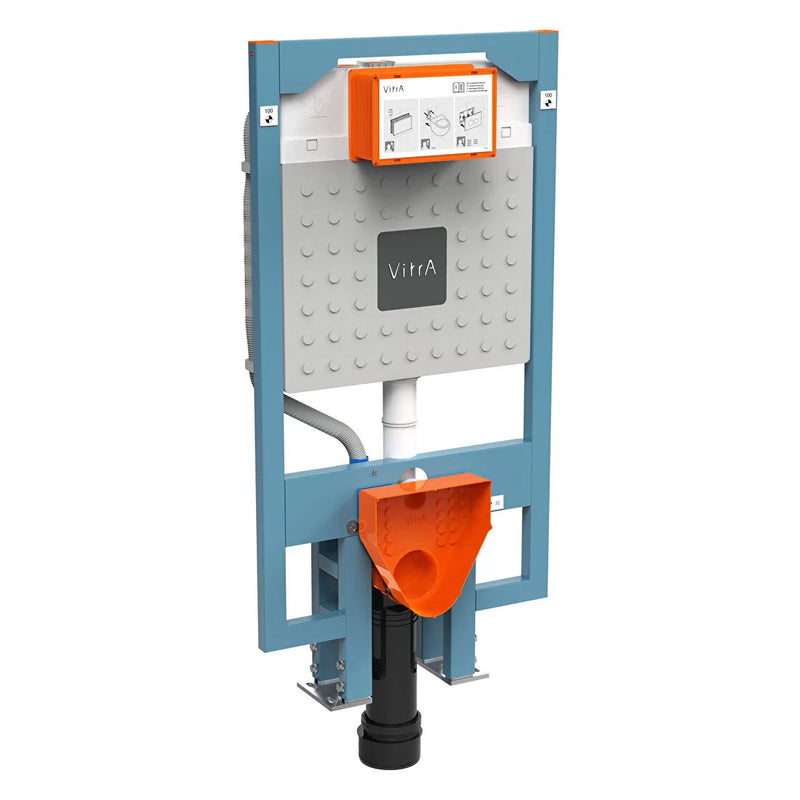
Concealed cistern and flush plate
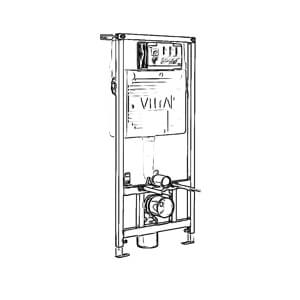
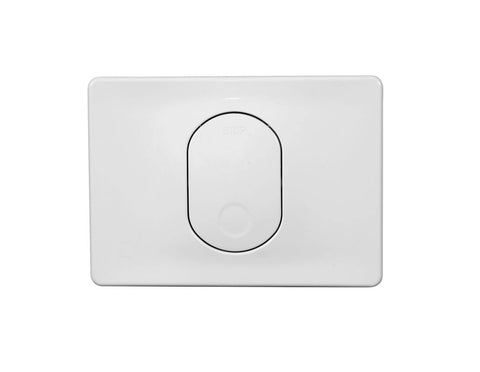
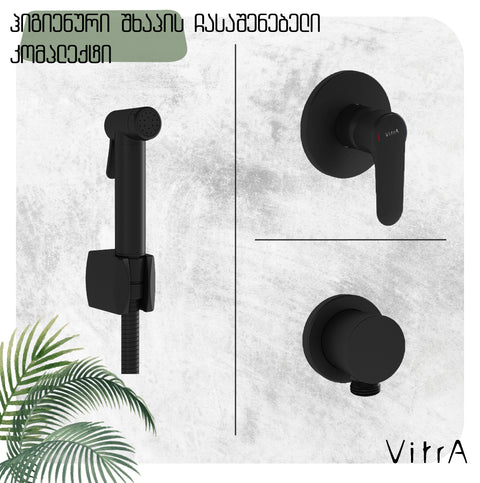
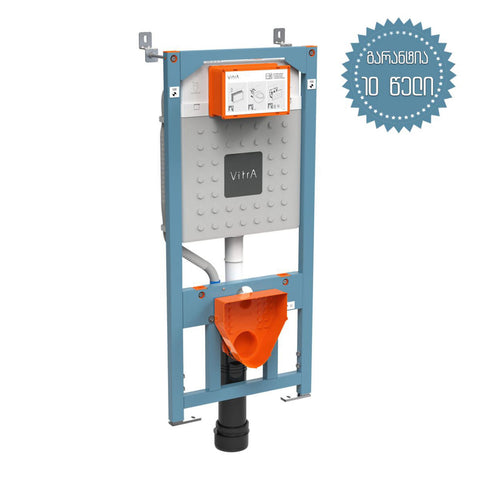
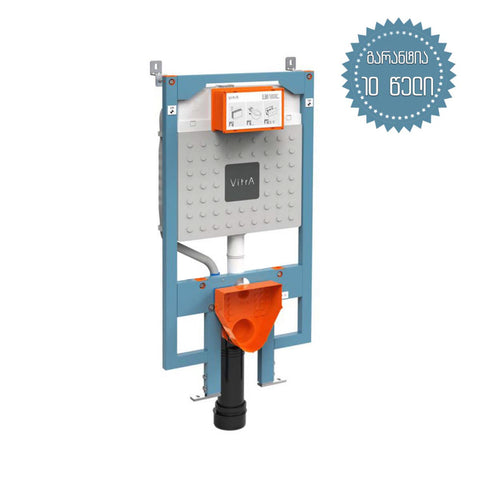
A wall-hung WC needs three things: a concealed cistern, a flush plate and, if you wish, a bidet mixer or a bidet hand shower.
- The concealed cistern goes into the wall or into a niche built in front of it. The steel frame of VitrA's cisterns carries loads of up to 400 kg, and the Adjustable Flush system lets you set the flush volume from 4 to 6 litres. Our cisterns come in several depths to suit the wall build-up: from slim 8 and 9 cm models to 13, 14, 15 and 20 cm ones, and a 26 cm back-to-back cistern.
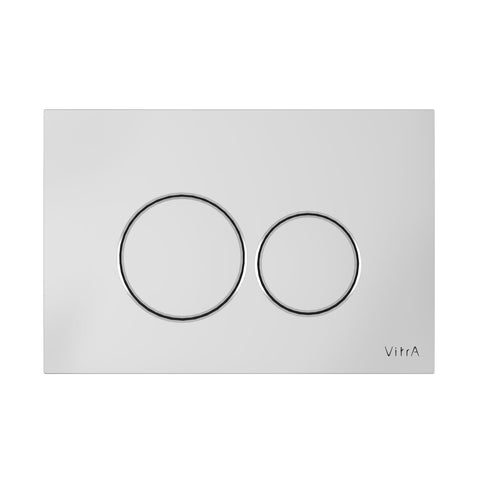
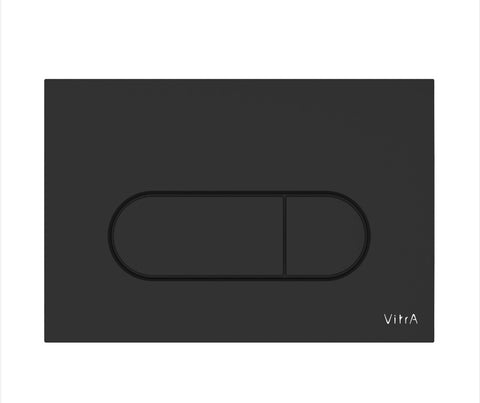
- The flush plate is the visible part on the wall, so it is also a design detail. Origin and Root flush plates come in the same finishes as their taps, from chrome to matt black and gold.
- A dual flush lets you choose a small or a full flush and saves water every day.
Installation and warranty
Correct installation decides both safety and a long service life. Before and after fitting, check:
- The outlet — the WC you choose must match your waste connection.
- The fixing — the WC must be fixed firmly to the floor or the wall.
- The flush — check that the cistern and the flushing system work properly.
- Cleaning products — avoid chemicals that damage ceramics and chrome-plated or stainless parts.
VitrA products are innovative and need professional fitting, so our service staff are trained continually; installation is a paid service. Ceramics carry a 10-year manufacturer's warranty, and you do not need to keep the receipt or the box to use it: your purchase is recorded in our database automatically.
See in the catalogue
Frequently asked questions
Which WC is best for a small bathroom?
In a small bathroom, people usually choose a wall-hung or compact WC: these models leave more room to move.
What are the standard dimensions of a WC?
A standard WC is generally 52–63 cm deep, 35–38 cm wide and 40–43 cm high.
How high should a WC be?
A WC is usually 40–43 cm high: an ergonomic height that makes sitting down and standing up comfortable.
What is a rimless WC?
A rimless WC has no hidden flushing channel, so there are fewer places where dirt and bacteria can build up, and cleaning is easier. VitrA's rimless technology is VitrA Rim-ex.
Which is more durable, a wall-hung or a floor-standing WC?
Wall-hung and floor-standing WCs are designed to pass the same load tests, so when they are installed correctly both are equally durable and long-lasting. The choice usually depends on the plumbing and the design of the bathroom.
Can I replace my old WC with a smart WC?
Yes, but a smart WC needs additional electrical and water connections, so plan for them before installation.
More guides
All guidesVanity unit sizes: how to choose
A vanity unit sets both the place of the basin and the storage. The right size makes the room feel orderly; the wrong one can even get in the way of a door. This guide shows how to measure your bathroom and which width fits your space.ReadSmall bathrooms: how to make the most of them
Small bathrooms pose unique challenges, but with the right approach you can make the most of every centimetre. From space-saving fittings to colour schemes, here is everything you need to turn a small bathroom into a comfortable, beautiful room.Read